Locate the Best Slot
 1. You want to be sure you’ll have a good chance to win, so take a number of different casinos, and look at the payouts for each one. Pick the casino with the highest payout figures. Then, if you can, drill further into the data on each individual slot machine on the site, and find the one with the best payout. Look for a percentage figure in the mid to high 90s. This really is the crucial figure when it comes to picking out the best slot.
2. When looking at payout figures for individual slots, take into account the variability. Many RTG slots, for instance, have high payout percentages, but those high figures are partly the result of ‘random jackpots’. You may have to wait quite a while for such a jackpot to come along, and your everyday percentages may be very different as a result.
Know What You’re After
3. Decide how and why you want to play. Slots with progressive jackpots could give you a massive payout when you’re successful, but you’ll go through long lean spells when you aren’t winning anything at all. An everyday three-reeler may dish out much less exciting prizes, but you’ll be getting payouts on a far more regular basis. If you’re there to win big, a progressive jackpot is likely to be your destination. If what you want is simply a fun hour or two, a three-reeler will give you near-constant action.
4. If you are taking part in a progressive slot, there’s no point in not going in big. Betting less than the maximum amount will probably preclude you from cashing in, even if you hit the jackpot. If you can’t afford to go maximum bet, don’t play.
5. Steer clear of slots with low progressive bonuses. This is probably a sign that somebody has recently cashed in, and it could be a long time before another jackpot is hit.
Stretching It Out
6. When you play a slot, you’re probably fighting against a sizeable house edge – maybe as high as 7 or 8%. So don’t feed in more than you have to. The smaller your individual bets, the less you’re going to lose over the long term.
7. If you want to draw out your play, look for slots that offer in-game free spins. Microgaming’s slot Thunderstruck, for instance, is famed for the large number of free spins that players can rack up. If you’re getting the possibility of strong multipliers on free spins, that’s better still.
8. Higher numbers of paylines may look more exciting, but they can often lose your money at a faster rate. Games with the lowest numbers of paylines will often get you more for your buck, and won’t whittle through your bankroll as quickly. Do make sure you’re not missing out on some sizeable bonuses by going for less than the maximum number of paylines, though.
Multiple-Coin Games
9. If you’ll want to vary the size of your stake, look for multiple-coin (or credit) games where the prizes rise proportionately with the number of coins or credits played. Don’t use games where, for example, the jump from one coin to two coin makes a difference of more than 100% to the payoffs, as you’ll be shooting yourself in the foot if you drop down to one coin.
10. With multiple-coin games, always look at the payouts to determine the optimum number of coins. If a three-coin game offers almost the same payout percentages as the two-coin version, then go for the latter. A lot of the time, playing with two-coins will get you a better deal overall than either the single- or three-coin version. However, sometimes, the three-coin bonuses will be more than a proportionate jump from two-coins. In that case, the best edge could well be with the three-coin version. Know your game before you play it.
11. If the payoffs do rise in strict proportion to the number of coins/credits played, play with only a single credit. The house edge counts against you every time you spin, and if the payoffs rise only proportionately, you’ll find your money goes further if you’re betting with the minimum. If you’re exposing your cash to the house edge, you need to be getting a good reward in return.
Tournaments, Bonuses, and Tasters
12. Tournament play is sweeping across the world of slots. Look for free-roll tournaments, as these let you play free of charge for genuine cash prizes. At the very least, you’ll get some good gaming experience without it costing you a penny. And you might even win.
13. Look for sites that offer free plays of slot games, and acquaint yourself with the rules, extras, bonus games, and other features. Only start playing with real money when you know what all of the features do.
14. Don’t scoff at welcome bonuses being offered by online casinos. You may well not get to win the bonus (there’s a reason why casinos often let slots contribute 100% towards bonus wagering requirements, but cut blackjack to 5% or 10%), but you will have considerably more money to play with. At the very least, you’re likely to gain some strong experience at little cost. Look for loyalty schemes as well, as these often allow you to amass points and then exchange them for cash – if you’re racking up the money, you might as well get something back.
15. Good casinos are always adding new titles to their books. Keep an eye for new slots, as these will often be given extra-juicy payouts in order to attract new customers.
Money Management
16. Although you have some control over the terms you’re prepared to accept when choosing a slot, the odds are very much against you succeeding in the long-term. The secret to success is really in how you manage your money. To this end, only take a sum of money you’re prepared to lose, and don’t lift your stakes just because you’re losing.
17. Set yourself a winning target for the night. Alternatively, if you win more than 20 times your bet size, withdraw the profits. You can’t win indefinitely, so you need to make sure you get to keep something of your wins.
18. Many slots have an Autoplay feature. This is an excellent money-management tool, particularly in a relatively mechanical game like a slot machine. You can set how much you wish to spend, and then sit back and let the computer handle the spins for you. You can stop at any time. Alternatively, you can let the computer reach your target, and then leave.
19. Don’t play when you’re distracted, depressed, or drunk.
20. Finally, the best way to manage your money is to not give it to a disreputable casino. Look for lots of strong reviews online and plenty of good reader feedback. There are a lot of casinos ready to take your money, so there’s no excuse for picking one that doesn’t have a comprehensive track record behind it.


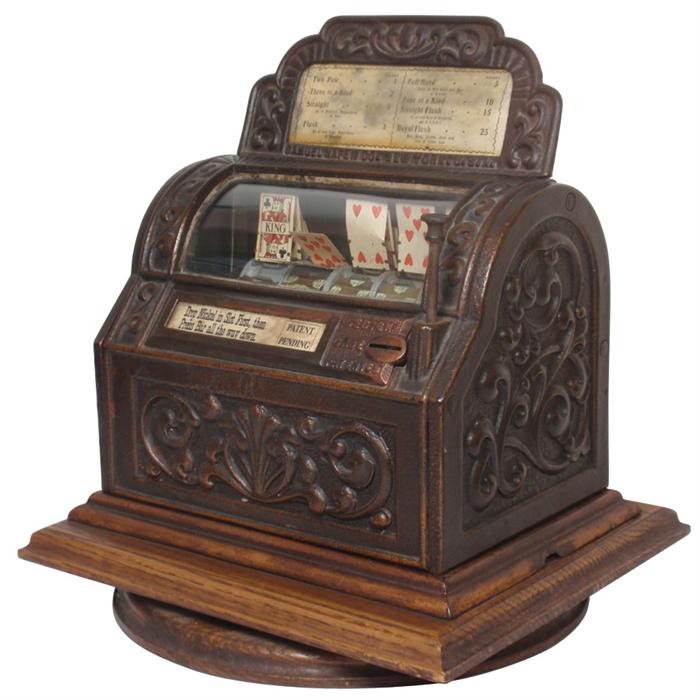 While most gambling games can trace their roots back hundreds – in some cases, thousands – of years, the birth of slot machines dates back merely to 1891. This was a time when America was getting richer and richer, with New York beginning to stake a claim for being the wealthiest city on earth. On the back of all this cash came an inevitable increase in gambling, and a poker craze was sweeping across the population. Sittman and Pitt came up with the idea of creating a machine that would allow you to ‘play poker’ even if there wasn’t anyone else to play against. Their new invention featured five drums, each one containing symbols for ten different cards. In all, you could have fifty different cards. You inserted a coin, and the machine told you your hand. Score a good hand, and won a prize.
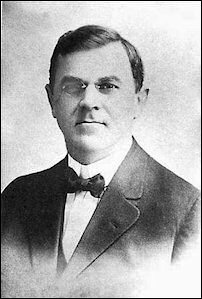 The new advance would come from a San Francisco car mechanic, Charles Fey, He did away with the fifty different combinations, cutting the number of drums from five to three, and replacing the ten card values on each drum with a choice of five different symbols. Fey felt that card values were a little too arcane, so he replaced them with bold pictures that symbolised diamonds, hearts, spades, horseshoes, and cracked bells. The idea was now very simple. Spin matching symbols, and you won a prize. Three of any symbol entitled you to a bigger reward, and three bells gave you the best payoff available – the iconic golden bells quickly led to the East Coast American audience christening Fey’s invention ‘Liberty Bell’. The final touch was the long lever that you used to ‘start the action’ – leading quickly to the alternative nickname of ‘One Armed Bandit’ – and today’s modern slot machines are remarkably similar in look to Fey’s original.

 ames may have developed in the backrooms and summerhouses of rich patrons in England, France and Italy (the word ‘casino’ itself comes from the Italian for ‘little house), but it’s the spas of southern Germany that took the first major step towards the creation of the modern casino. These early venues included Bad-Homburg, and the Casino Baden-Baden – the latter, in particular, remains one of Europe’s most glamorous locations, and was the place that inspired Dostoevsky to write his story of riches to rags, The Gambler. The idea was that you could spend a few weeks in peace and quiet, taking in the healing waters. As you did so, you could take in a few hands of cards, or spin a roulette wheel or two.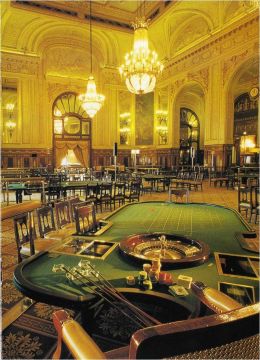
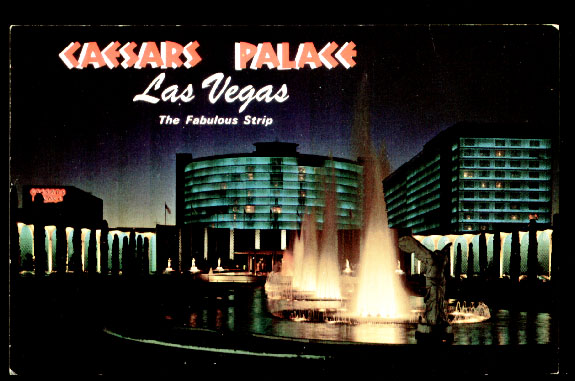

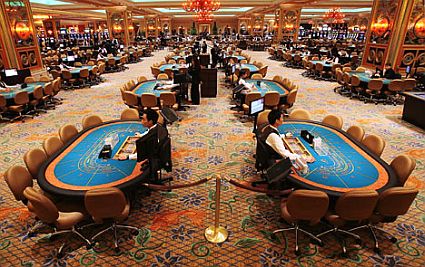
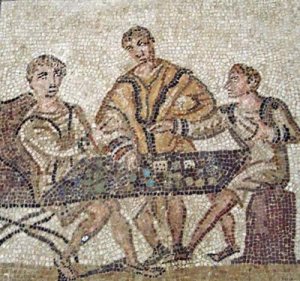 Gambling as a pastime may stretch back thousands of years, with some ancient cave drawings hinting at chance-based games – certainly, bone tossing seems to have developed into the dice used by the Greeks and Romans. Many of today’s games, though, seem to have had their origins not in pleasure, but in more functional pursuits. The Norwegian and Swedish kings may have thrown dice in the early 11th century, for instance, to decide which of their countries would take possession of the disputed territory of Hising. This seems positively frivolous compared to the origins of the modern game of Baccarat.
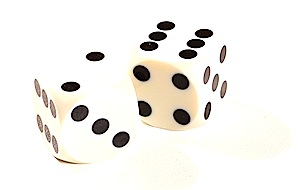 The Etruscans had an early form of the dice, but it was in later Roman times that the idea of a proper cube-shape would come into being. The rolling of cubic knucklebones also seems to have led to the development of Craps, the most explosive and spectacular of dice games in today’s casinos. Modern Craps may well have derived from the Arabs of the middle ages, though, and they had a multiple-dice game called Azzahr. This passed to the English as Hazard. Somewhere along the line, the game appears to have been renamed Craps, perhaps in a reference to Crabs, the name the French gave to the lowest roll in the game.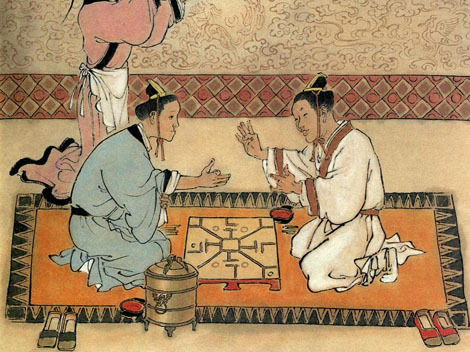
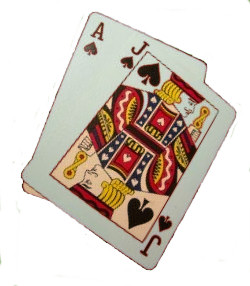 Blackjack had developed from the the French game of Vingt-et-Un (a reference to the game’s best hand of 21). It was the Nevada casinos who came up with the name ‘Blackjack’, using it to refer to a hand that included the Ace of Spades plus either the Jack of Spades or Jack of Clubs. If you received a ‘Blackjack’, you got a payout of 10 to 1, and the allure of such a win drew huge numbers of participants. The payout has since been dropped, of course, but the name remains. Baccarat remained a fairly exclusive European pursuit until the 1950s, when it made a big impact in South America and Cuba (from where the most modern version takes its name of Punto Banco). It eventually made its way into Las Vegas casinos (perhaps with the advice of Frank Sinatra, although many give the credit to casino executive Tommy Renzoni), although the game has never entirely caught on in North America. It’s also true that not every American development has been beneficial for punters – the modern ‘American style’ roulette table has an additional ‘double zero’ square that doubles the house edge compared to the European version.